Drug policy covers everything from the classification of drugs and which are illegal to legal punishment for drug activity and treatment as well as rehabilitative services. Drug policy differs throughout the world and it also differs by the kind and type of drug. Certain drugs have certain penalties. Milder drugs, such as cannabis, have lesser sentences than harder drugs such as heroin. Governments are not the only contributors to drug policy. Societies define not only the meaning of drugs but also the meaning of the drug experience; these definitions differ radically among different societies and among subgroups and subcultures within the same society. Social groups and cultures define what kind of drug taking is appropriate. These groups define which drugs are acceptable and which are not. They define who takes drugs and why. They decide what amounts of each drug are socially acceptable. They spell out which social situations are approved for drug use and which are not. They define what drugs do, what their actions and effects on people will be. In Becker’s book he states, “Social controls affect individual behavior, in the first instance, through the use of power, the application of sanctions” (Becker, 1963). Governments as a social institution control individual behavior, in this case, drug use, through laws and policies. In early 2014, the U.K.’s government conducted an eight-month study comparing drug laws and rates of drug use in 11 countries, including Portugal. Published in October, the report concludes that “we did not in our fact-finding observe any obvious relationship between the toughness of a country’s enforcement against drug possession, and levels of drug use in that country.”
Heroin & Portugal
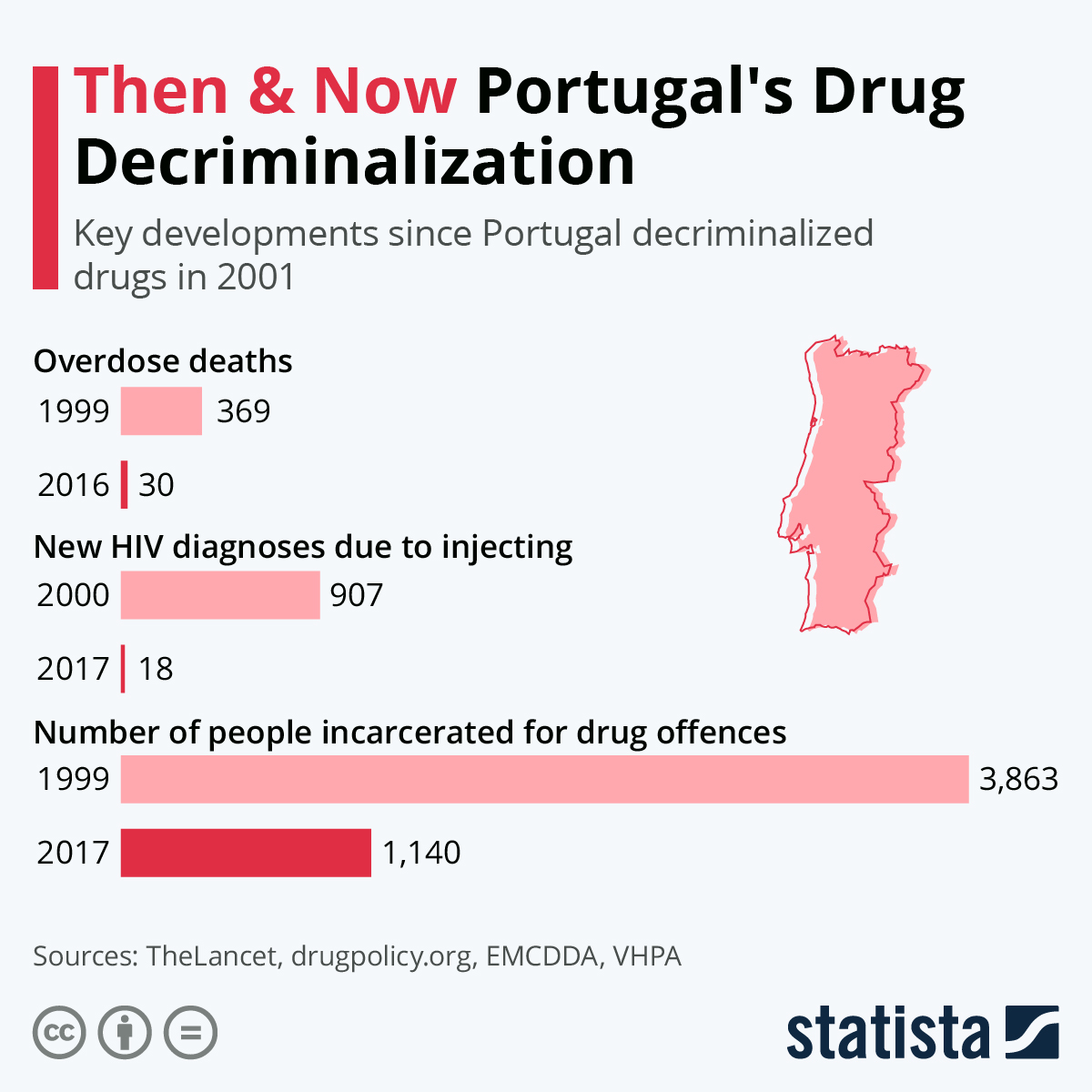
In an effort to reduce harm related to drug use and drug criminalization, Portugal is leading the way. Rather than respond as many governments have, with zero-tolerance legislation and an emphasis on law enforcement, the commission suggested the decriminalization of all drugs, coupled with a focus on prevention, education, and harm-reduction. The objective of the new policy was to reintegrate the addict back into the community, rather than isolate them in prisons, the common approach by many governments. Two years later, Portugal’s government passed the decriminalization of all drugs. Portugal’s drug policy aims to support individuals and communities suffering from drug use rather than punish them.
Heroin and the U.S.
Drug policy in the United States could not be more different. In the U.S., law enforcement still takes center stage, and the war on drugs is defended by vested interests — from police unions to private prison companies — that command billions in resources. While the top drug control official in Portugal is a doctor, the U.S. has a drug high level official who specializes in law enforcement. Unlike Portugal, no illicit drug has been decriminalized federally. When heroin possession is charged as a federal offense in federal court, a person who is convicted of a first offense of heroin possession, who has no prior convictions of possession of any narcotic (be they in federal or state court), may be sentenced to not more than one year in prison, fined not less than $1,000, or both. A person convicted of heroin possession after a prior conviction of possession of that or any other narcotic in either federal or state court may be sentenced to not less than 15 days and not more than two years in prison, fined not less than $2,500, or both. Two or more prior convictions of possession of any narcotic in federal or state court may lead to a sentence of not less than 90 days in prison, a fine of not less than $5,000, or both. The term of imprisonment and the amount of the fine may be affected by the quantity of the drug seized. A charge of possession with intent to distribute (sell) heroin greatly increases the penalties.
References
Becker, Howard. (1963). Outsiders: Studies in the Sociology of Deviance. New York City, New York: The Free Press.
Inciardi, J. (1987). Sociology and American Drug Policy. The American Sociologist, 18(2), 179-188. Retrieved April 26, 2020, from http://www.jstor.org/stable/27702561
 SOCI 260: Elizabeth Cullinan