Abstract
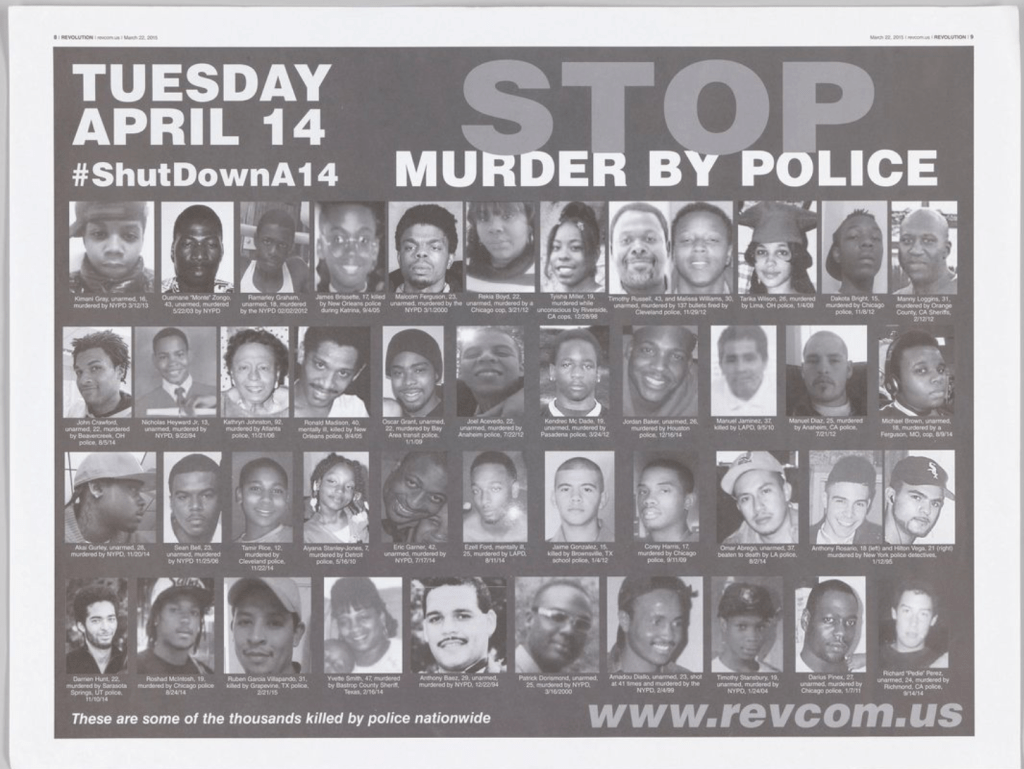
For my final research project, I will be discussing how police violence differs by race and gender. African American males have an increased risk of being killed by the police even when they are unarmed and haven’t committed crimes (Edwards, 2019). I will be connecting police brutality against blacks in connection to Howard Becker’s labeling theory. Becker argues that people come to identify and behave in ways that reflect how others label them. By applying labels to people and creating categories of deviance, these people in power reinforce society’s power structure. The racial or ethnic majority group defines deviancy for minorities. In this case, white police officers define deviancy for blacks. Racial stereotypes result in the mislabeling of people of color as deviant which results in an increased risk of death for blacks by the police.
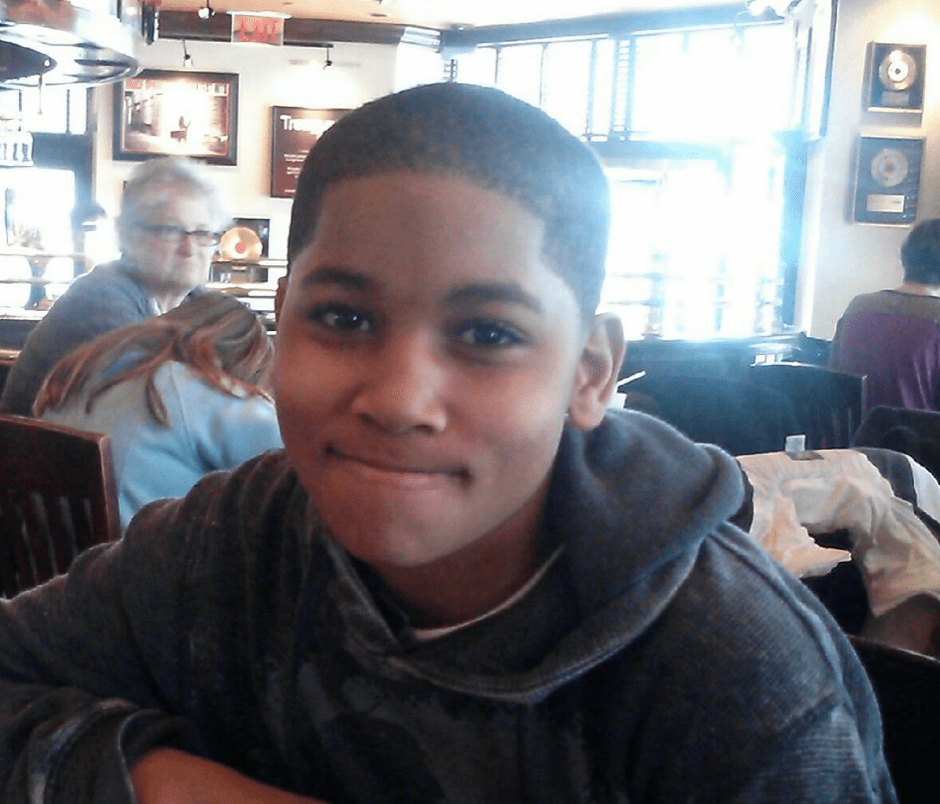
Seconds later the boy lay dying from a police officer’s bullet. “Shots fired, male down,” one of the officers in the car called across the radio. “Black male, maybe 20, black revolver, black handgun by him. Send E.M.S. this way and a roadblock.”
But the boy, Tamir Rice, was only 12.”
https://www.nytimes.com/2015/01/23/us/in-tamir-rice-shooting-in-cleveland-many-errors-by-police-then-a-fatal-one.html
Police Brutality & Labeling Theory
Howard Becker wrote, “Deviancy is not a quality of the act a person commits, but rather a consequence of the application by others of rules and sanctions to an ‘offender’. Deviant behavior is behavior that people so label” (Becker, 1963). Howard Becker’s labeling theory, which purposes that people adopt deviant behaviors that break social norms after they have been labeled deviant by others and/or by social institutions.
Police brutality is the use of force against another person. Excessive use of physical violence constitutes brutality. But brutality goes beyond physical force. It includes emotional and sexual violence as well as verbal assault and psychological intimidation. The term “brutality” conveys more than police misconduct: “It is police conduct that is not merely mistaken, but taken in bad faith, with the intent to dehumanize and degrade its target” (Kridkin et al., 2017).
A substantial body of evidence shows that people of color, especially African Americans, are at greater risk for experiencing criminal justice contact and police-involved harm than are whites (Chaney, 2013; Von Drehle et al., 2019; Dottolo, 2016). The most comprehensive information about the connection between race and death during police encounters comes from data collected by a UK newspaper, The Guardian. Analysis of the data concluded that in 2015, “young black men were nine times more likely than other Americans to be killed by police officers.” (Alang et al. 2017).
Demographics
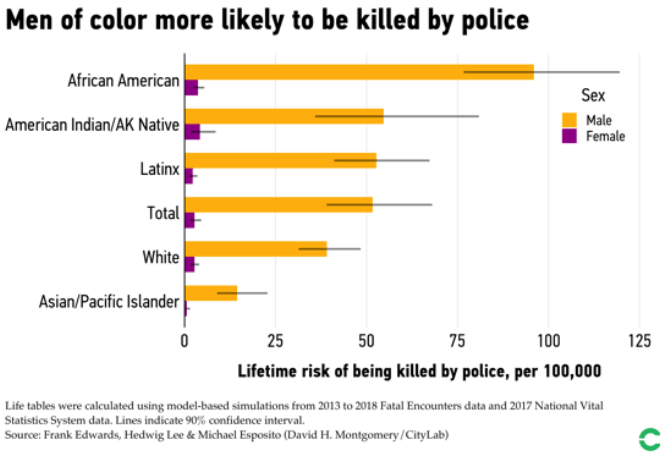
In the U.S., African Americans are 2.5 times more likely to be killed by police than white people. For black women, the rate is 1.4 times more likely.
That’s according to a study conducted by Frank Edwards, of Rutgers University’s School of Criminal Justice, Hedwig Lee, of Washington University in St. Louis’s Department of Sociology, and Michael Esposito, of the University of Michigan’s Institute for Social Research.
According to a study published in the Proceedings of the National Academies of Sciences, over the course of a lifetime, black men face a one in 1,000 risk of being killed during an encounter with police, a rate much higher than that of white men (Edwards et al., 2019).
African Americans being anywhere from harassed to murdered are commonly portrayed in films. An an article that examine how anti-black police violence is depicted in film, the author writes, “The risk of being killed in a violent interaction with the police depends not only on environmental circumstances and individuals’ choices, but also on the interplay between one’s race/ ethnicity and the broader contextual environment in which policing occurs” (Westerbeck, 2020).
Social Institutions & Power
A few social institutions influence police brutality against blacks. The government as an a social institution affects its workers and the people they serve. The police work for the state government. The police have been found to kill and injure blacks at higher rates than whites in the U.S. during encounters. The government is a major source of power and so, many police officers use their power excessively. They exercise their power by using unnecessary use of force or violence and label people of color as more dangerous than whites.
The criminal justice system is also a social institution that affects police brutality. The criminal justice system is a formal mechanism whereby social control is maintained. The criminal justice system is flawed in regards to black policy brutality. The system allows male blacks to be killed more by the police than any other race or gender.
Canada & Police Brutality
Canada’s record may not look as extreme as America’s stack of black bodies, bloodied, battered and buried by police violence but anti-black police violence is still prominent in the country. Since 1978, no police officer has ever served prison time for killing a black person (Morgan, 2016). Even though they are more often the victims of police violence rather than whites. Canada, like the U.S.. does not hold police accountable for unnecessary violence against blacks. In Canada, blacks are more often injured or killed as a result of police violence than any other race. Like in the U.S., black men are the most likely to be killed in an encounter with the police (Morgan, 2016). Although Canada has a different gun culture than the U.S., they still have a problem with police shooting black men who are often unarmed (Holmes, 2008).
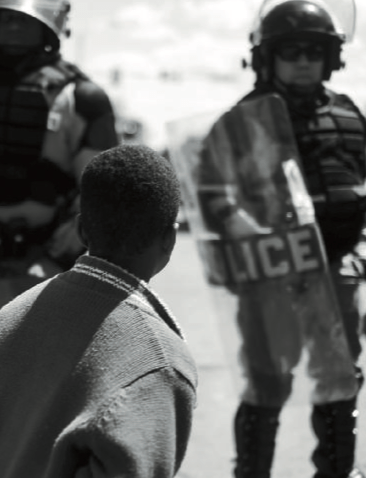
(Anti-black police violence is a very American thing. Although it has been found to also be prominent in Canada, there is no data to suggest in happens significantly in any other country)
References
Becker, Saul Howard. (1963). Outsiders: Studies in the Sociology of Deviance. New York City, New York: The Free Press.
Alang, Sirry, et al. (2017). “Police Brutality and Black Health: Setting the Agenda for Public Health Scholars.” American Journal of Public Health, 5(107), 662–665., doi:10.2105/AJPH.2017.303691
Chaney, C., Robertson, (2013). R.V. Racism and Police Brutality in America. J Afr Am St 17, 480–505.
Holmes, M. D., & Smith, B. W. (2008). Race and Police Brutality : Roots of an Urban Dilemma. State University of New York Press.
Westerbeck, R. (2020). Police Brutality, Over-Policing, and Mass Incarceration in African American Film. Journal of Black Studies, 51(3), 213–227.
Von Drehle, D., Sanburn, J., Altman, A., Calabresi, M., Rhodan, M., & Scherer, M. (2015). The Roots of a Riot. (Cover story). TIME Magazine, 185(17), 34–39.
Alang, S. (2018). The More Things Change, the More Things Stay the Same: Race, Ethnicity, and Police Brutality. American Journal of Public Health, 108(9), 1127–1128.
Morgan, A. (2016). Why Canada needs Black Lives Matter. CCPA Monitor, 23(3), 10.
Kridkin, K., Wintersieck, A., Courey, J., & Thompson, J. (2017). Race and police brutality: The importance of media framing. International Journal of Communication 11(2017), 3394–3414.
Dottolo, A.L., Stewart, A.J. (2016). Don’t ever forget now, you’re a black man in america: Intersections of race, class and gender in encounters with the police. Sex Roles 59, 350–364.
Edwards, F., Hedwig, L., & Esposito, M. (2019). Risk of being killed by police force in the United States by age, race- ethnicity and sex. PNAS, 34(116), 16793-16798.
 SOCI 260: Elizabeth Cullinan